

Saving Natural Teeth
To keep a tooth or not keep a tooth… that is the question.

To keep a tooth or not keep a tooth… that is the question.
Abdul has gained Membership in Endodontics at the Royal College of Surgeons’ and is a clinical lecturer in Endodontics at the University of Liverpool. He is a Specilaist in endodontic treatment and is accepting referrals for consultations and treatment of Complex root canal treatments, both primary and re-treatment cases. Taking pride in providing treatment in a caring manner, all his treatment is completed under the operating microscope, and to a high standard to help patients maintain their natural teeth for longer. In addition to completing 3 years full time clinical training at the University of Liverpool, he has completed a...
READ MORE

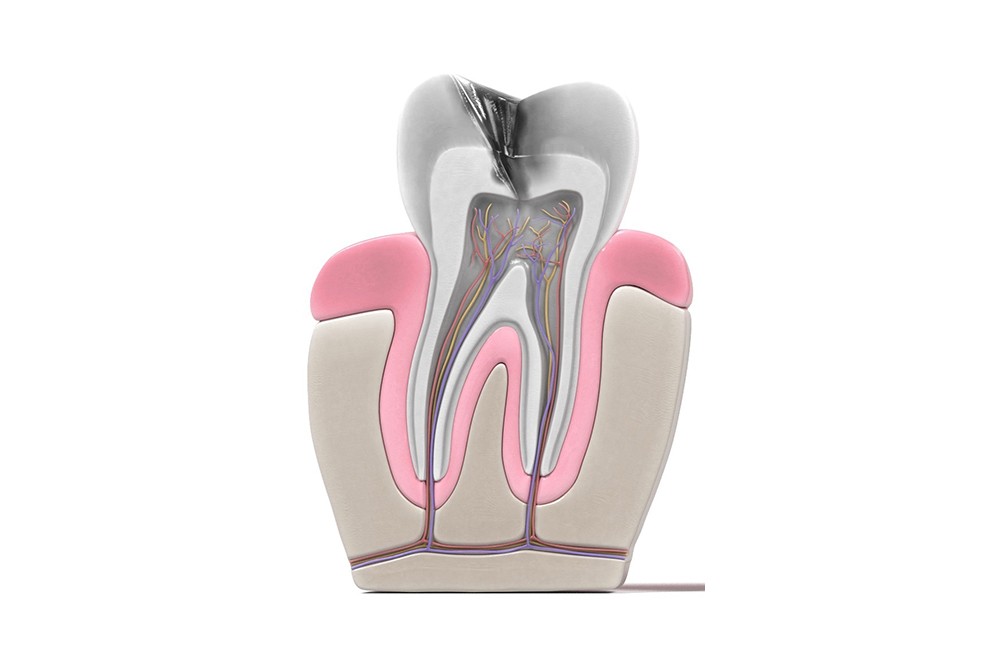
Inside every tooth there are thin soft tissue “strings” which are fine nerve tissue. A healthy tooth will respond to temperature such as cold drinks, or ice cream with a sharp twinge which usually goes away within seconds. This is the “nerve” acting like a temperature sensor.
If a tooth has a cavity, a fracture or a crack, which allows bacteria to invade the “nerve”, it will give toothache. A toothache can be reversible if caught early, allowing the nerve time to repair itself, by having a filling to seal off the ingress of bacteria.
Unfortunately, if the bacteria are deep enough inside a tooth, they will cause the nerve to get inflamed, swell up and then an irreversible toothache will occur, which won’t respond to a simple filling. This will lead to the nerve being infected by the ingress of bacteria, and eventually an abscess will develop under the tooth.
At this stage there are two options... A root canal filling or an extraction.
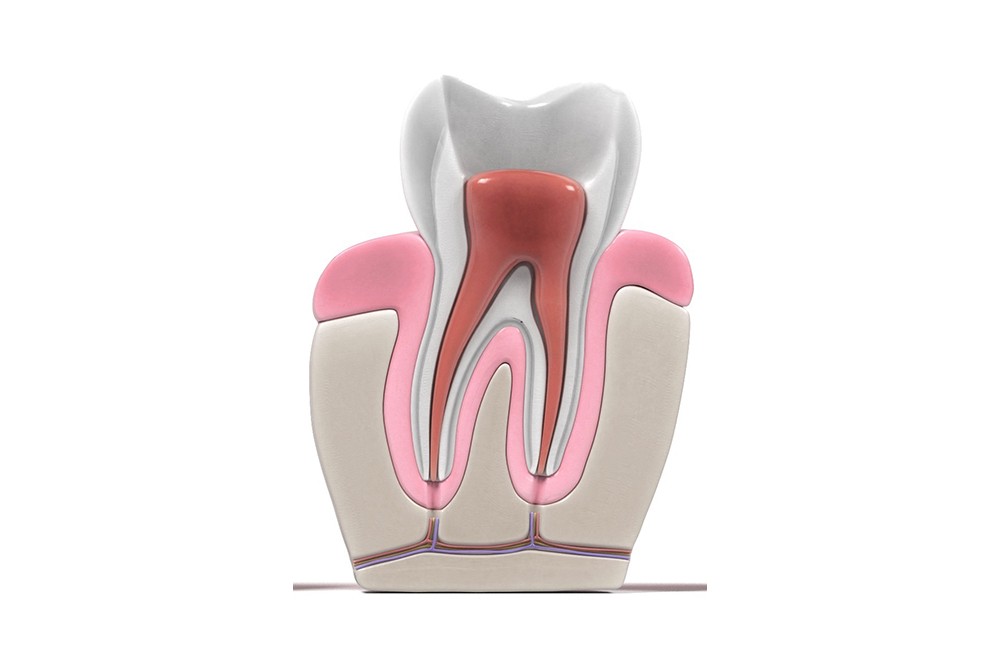
Once the nerve chamber inside a tooth is irreversibly inflamed and infected, then the only way to save a tooth is to have all this infected tissue removed. A root canal filling is a routine treatment, which is complex in some cases. It involves gently cleaning the canal, removing infected nerve tissue and shaping of the inside of the tooth and root. This is done under a “rubber dam”, an isolating sheet of rubber, using disinfection chemicals and special instruments.
The end result is a clean, neatly shaped root canal space inside the tooth, which is free of bacteria. This is then filled with special rubber cones, a special glue, and the whole root is filled and sealed. The tooth then would be conventionally crowned to protect its integrity, or sometimes a post is required before a crown to reinforce the tooth.
Once the tooth is disinfected and sealed under sterile conditions and filled, it gives the body time to deal with the abscess under the root in the jaw bone. By having all the bacteria removed from inside the tooth, the immune system has a greater chance to mop up and eliminate the rest of the bacteria, leading to a healthy, non-infected bone. The success rate of a new root canal is around 90%.
Sometimes root canal therapy is not done to the best standard as described above, or the anatomy of a tooth is more complex than that which a General Dental Practitioner can manage.
Endodontics is a specialised field, where an Endodontist spends the majority of their day re-doing complex root canal re-treatments which have failed, or sometimes carrying out the complex root canal treatment in the first instance. Endodontists have experience in working using a Dental Microscope allowing them to see up to 20 times more than the naked eye. This magnification, with enhanced lighting, allows them to see inside the tooth better to find missing calcified nerves, removal of fractured instruments, bypass ledges, and allows them to deal with some failing root canals, to give a tooth a last chance to survive. The success rate of a root canal re-treatment is around 75%-80% with a Specialist Endodontist.
At Deintyddfa Na-Nóg Dental & Implant Team we accept referrals to our visiting Specialist Endodontist.
Click here to refer your patient to our Specialists
Due to the sometimes chronic nature of failed root canal fillings, and the biology of the infection and type of bacteria that caused the original abscess, in some people the root canal treatment does not respond, even if the tooth is sterile, clean and infection free inside. This because there is a human factor, the body’s ability to repair.
Sometimes, an Endodontist will have to carry out a microsurgical procedure, where they will access the chronic infection from above the root, through a small window in the bone. They will using highly specialised equipment, remove the tip of the infected root, seal the root from the tip using a special cement, and clean out the area. This then allows the body a better change to heal and repair. This is called an apicectomy, and with modern techniques, can have a high success rate.
If this procedure is not possible, or if a patient does not wish to have this procedure, then a dental implant can be placed. For more information, please see our dental implants section.
The photos below show the stages of root canal treatment - from initial cavity to a filled and crowned tooth.




For more information or to book a free consultation with a Treatment Coordinator please call us on:
Not a patient of ours?
Apply TodayPrinted from www.nanog.dental 28/10/2026 15:11:25.
Deintyddfa Na-Nóg Dental & Implant Team, 8 Llys Castan, Parc Menai, Bangor LL57 4FH
Tel: 01248 858383
Email: reception@nanog.dental