

Oral Health & Hygiene
Investing in good oral hygiene will be the backbone for the foundations of your teeth, and dental implants.

Investing in good oral hygiene will be the backbone for the foundations of your teeth, and dental implants.
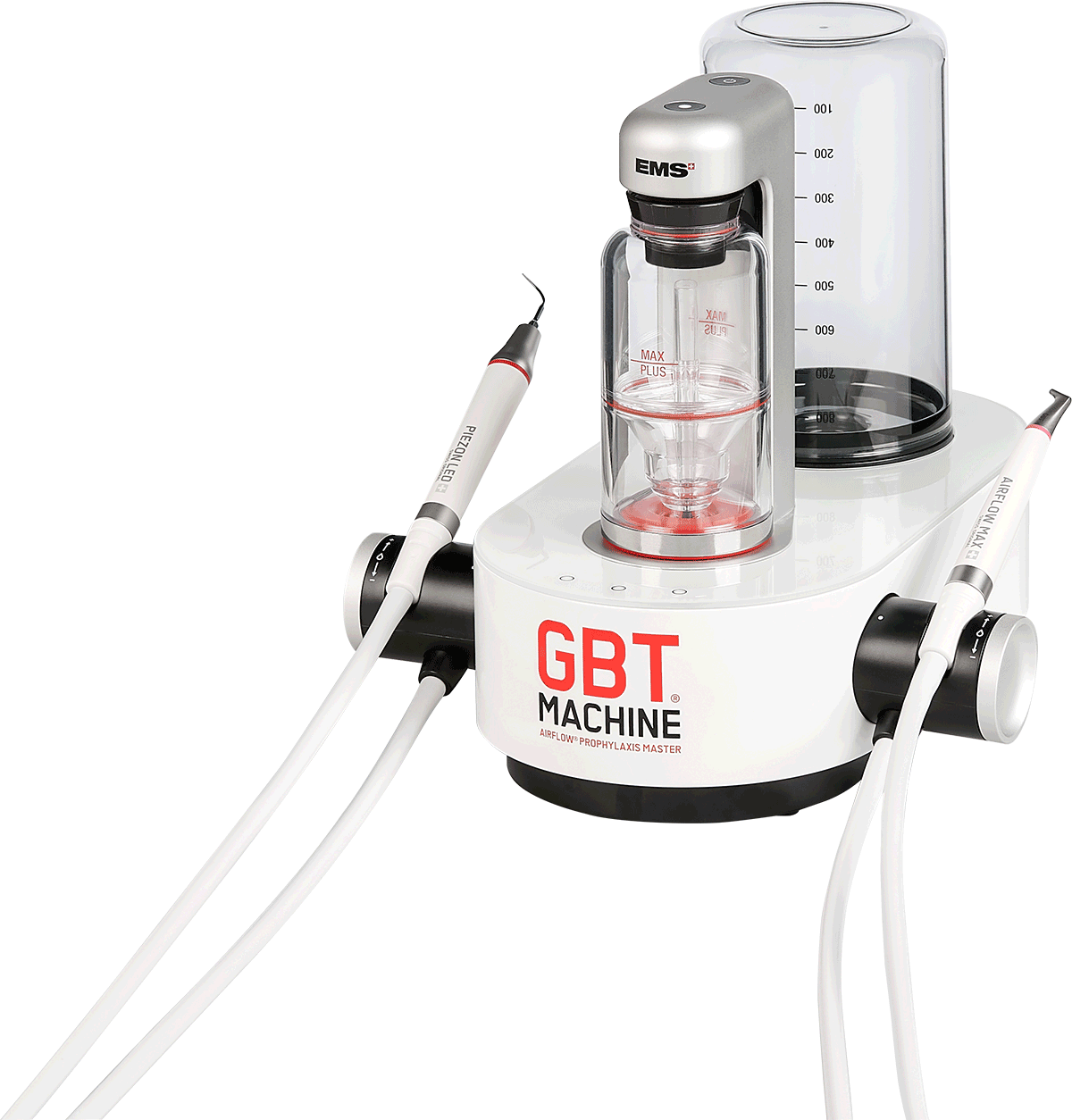
At Na-Nóg we have an ethos that unless the gums and bone of your teeth are healthy, then there is a good chance there will be other medical problems, as well as a greatly reduced chance of any dentistry we provide being successful in the long term.
We have invested in advanced equipment to provide the best hygiene and gum disease therapy in North Wales. We follow a concept called “Guided Biofilm Therapy” (GBT), where we use warm pleasant tasting water and powerful, but gentle, air power, to actively remove bacteria and stains; a different and more comprehensive experience to previous hygiene visits.
We are the first centre in North Wales to be carrying out Guided Biofilm Therapy, and we are a Swiss Academy Training Centre for this technique.
We receive referrals from all over North Wales for treatment for gum disease, have many years experience of treating complex cases, and have successful long-term maintained patients that we look after. Dr Mike Hughes has been accepting referrals for this type of work since 2009.
The majority of cases can be dealt with non-surgical therapy, for a small handful of cases we need to do surgical therapy or a combination approach.
Plaque is a soft sticky substance, which contains bacteria which live in your mouth and sugars from your diet. If you leave plaque long enough near your gums you will get gingivitis – swelling and inflammation of the gums. This is very common and nearly 90% of us may have symptoms of gingivitis at any one time; typically slightly swollen gums and bleeding whilst brushing. This is a sign of inflammation - your gums trying to tell you that you are not removing plaque efficiently in certain areas of your mouth. This is reversible with good cleaning.
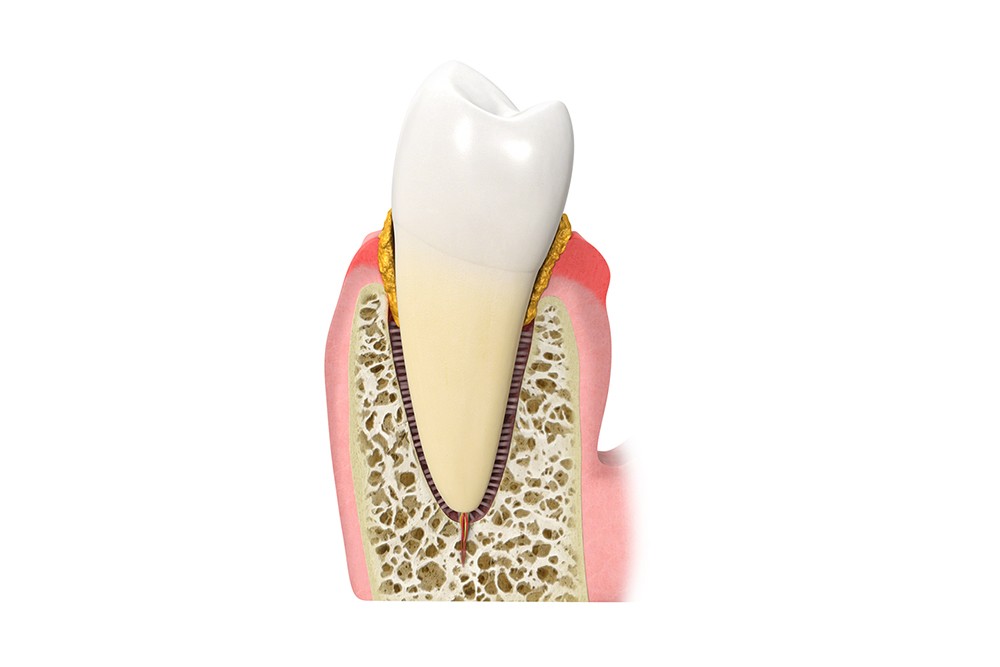
Unfortunately for 15% of the population, this gingivitis can progress and cause irreversible severe damage, which will include deep spaces developing between gums and teeth (pockets), gum shrinkage, and loss of bone. This is called periodontitis. If this is not controlled then eventually there will be sufficient bone loss that teeth will become loose and fall out. 50-70% of the population will have mild to moderate periodontal disease if not controlled.
Some patients have increased risk of developing gum disease such as smokers, uncontrolled / undiagnosed diabetics, and stressed individuals. Other patients are genetically more prone or susceptible to having gum disease, for example those with parents who may have suffered from premature tooth loss. If you grind your teeth, referred to as bruxism, then this will also accelerate further bone loss.
It has also been shown in scientific studies that there is an association with gum disease and coronary heart disease, which can lead to heart attacks. Gum disease is also associated with increasing age, rheumatoid arthritis, respiratory disease, dementia and stroke.
This doesn’t have to happen; the disease can be stopped and maintained with your help, and the guidance of your dental team.


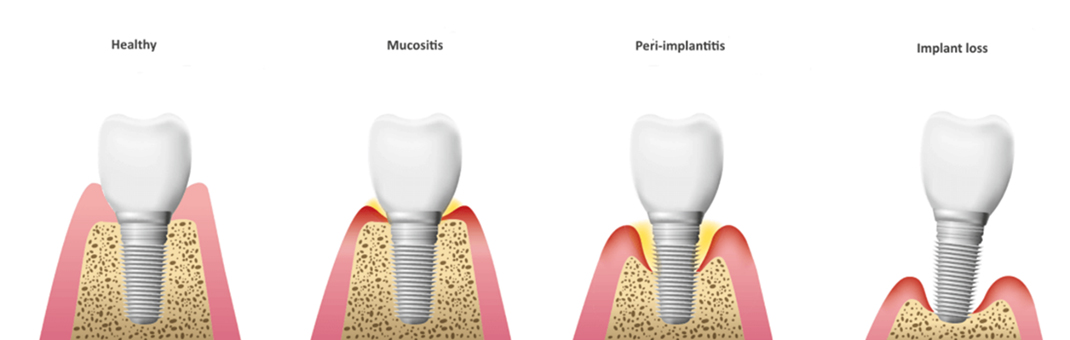
The photos below show the stages of Periodontal gum disease - from healthy gums and bone to eventual tooth loss.



As part of dental implant therapy prevention of complications starts before dental implants are placed!
Dental implants are not teeth. They are designed to have a rough surface, which allows for bone to grow on to the titanium surface, and form a biological bond, a term called osteointegration. If implants are not looked after well, they can fail quite quickly, loosing bone and get infected and fall out.
They are not a “fit and forget” solution for missing teeth. They have to be placed in the correct 3D position, with enough bone around them, as well as adequate quality, and thickness of the correct soft tissue /gum.
Hygiene maintenance is part and parcel of dental implant therapy, and contributes to the longevity of dental implant restoration, and keeping the implants healthy for the longer term.
The majority of cases can be dealt with non-surgical therapy, for a small handful of cases we need to do surgical therapy or a combination approach.
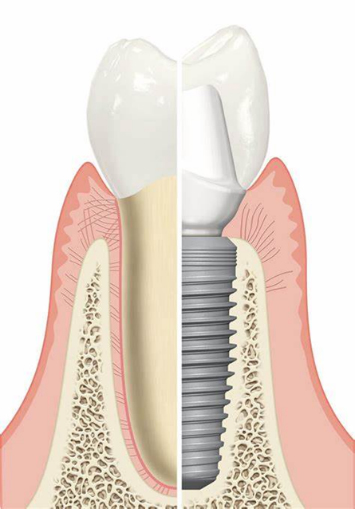

Mucositis is similar to gingivitis which occurs on teeth. It’s reversible inflammation of the soft tissue/ gum around a dental implant. Mucositis occurs on average in 43% ( range 19-65%) of all implants. The progression of this to a more serious problem can be controlled by cleaning better around a dental implant to remove harmful plaque/bacteria. Dental implant maintenance is a continual process, and the first year is an important milestone for preventing and diagnosing issues, and your mouth should be closely monitored.
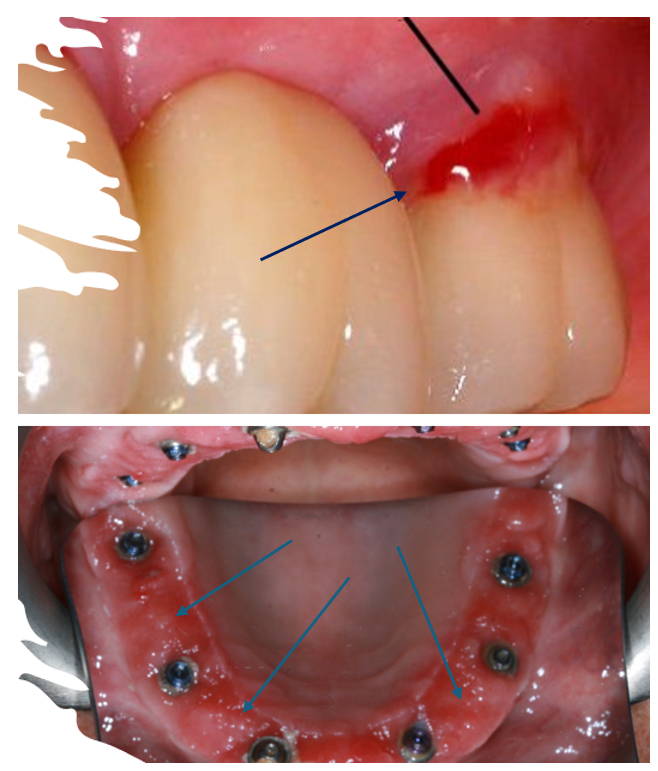
Peri-implantitis is a progression of mucositis above, and would demonstrate inflammation in combination with bone loss. The gums would be inflamed , with bleeding on probing, and quite often pus on probing as well. It’s quite common for peri-implantitis to be pain free initially, but as the lesion progresses and more bone is lost, and tissues get destroyed then it can be sore. Peri-implantitis affects up to 22% of all implants ( range 1-47%).
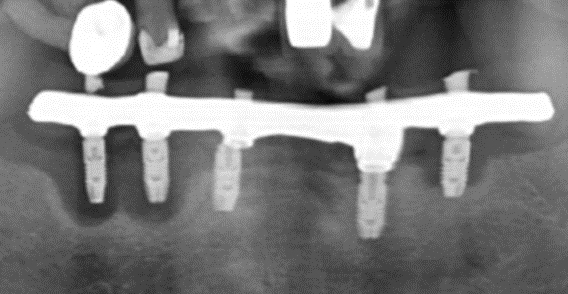
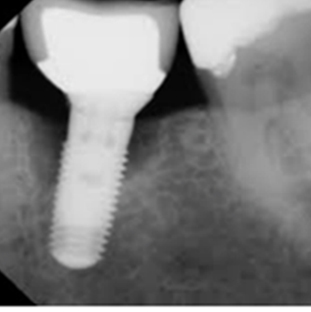
When diagnosed with peri-implantitis, a decision needs to be made if the implant can be saved, or should be removed.
Treatment is always non-surgical first, to improve the gum health, before considering surgical treatment. This would be discuss with all patients. Sometimes bone loss is so severe, that removal and starting again is the best option.
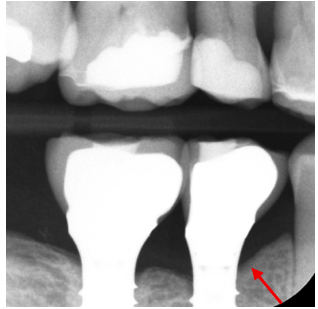
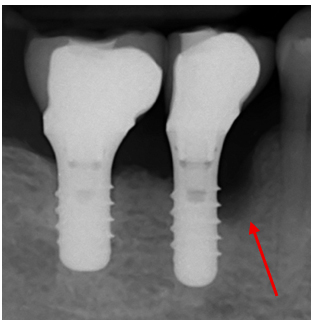

Some patients have increased risk of developing peri-implantitis such as factors like:


For more information or to book a free consultation with a Treatment Coordinator please call us on:
Not a patient of ours?
Apply TodayPrinted from www.nanog.dental 28/10/2026 08:04:09.
Deintyddfa Na-Nóg Dental & Implant Team, 8 Llys Castan, Parc Menai, Bangor LL57 4FH
Tel: 01248 858383
Email: reception@nanog.dental